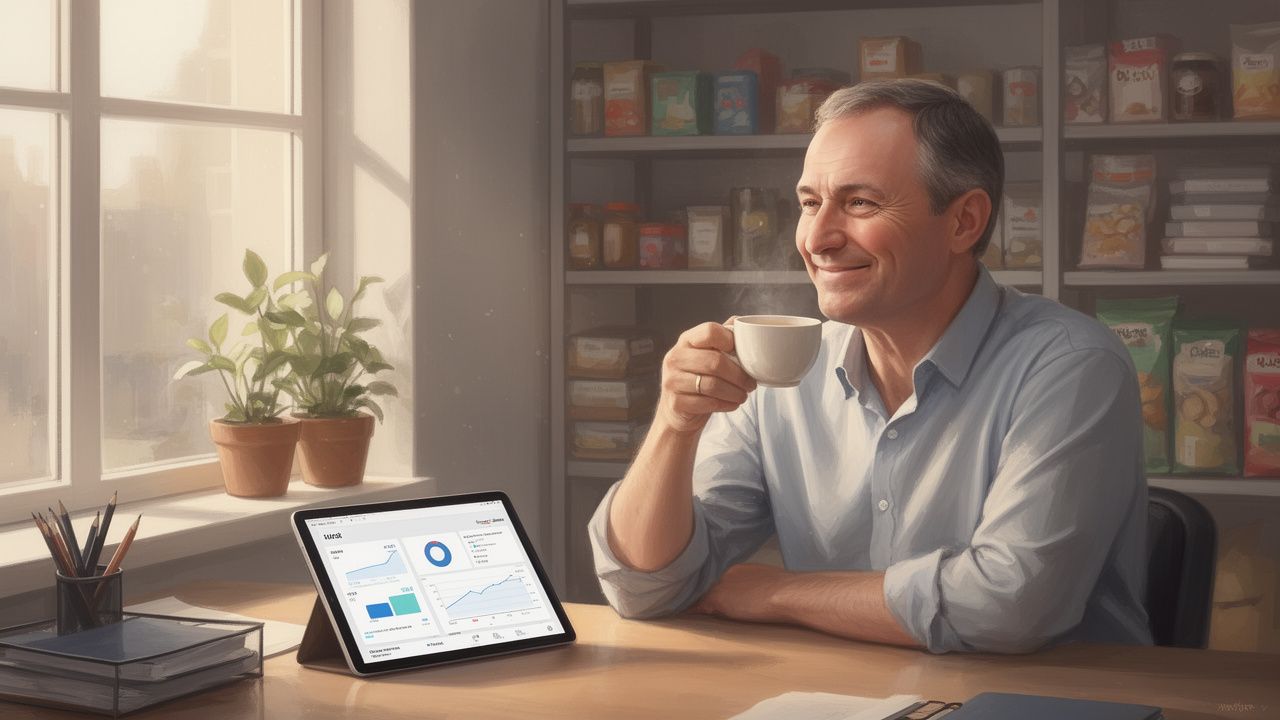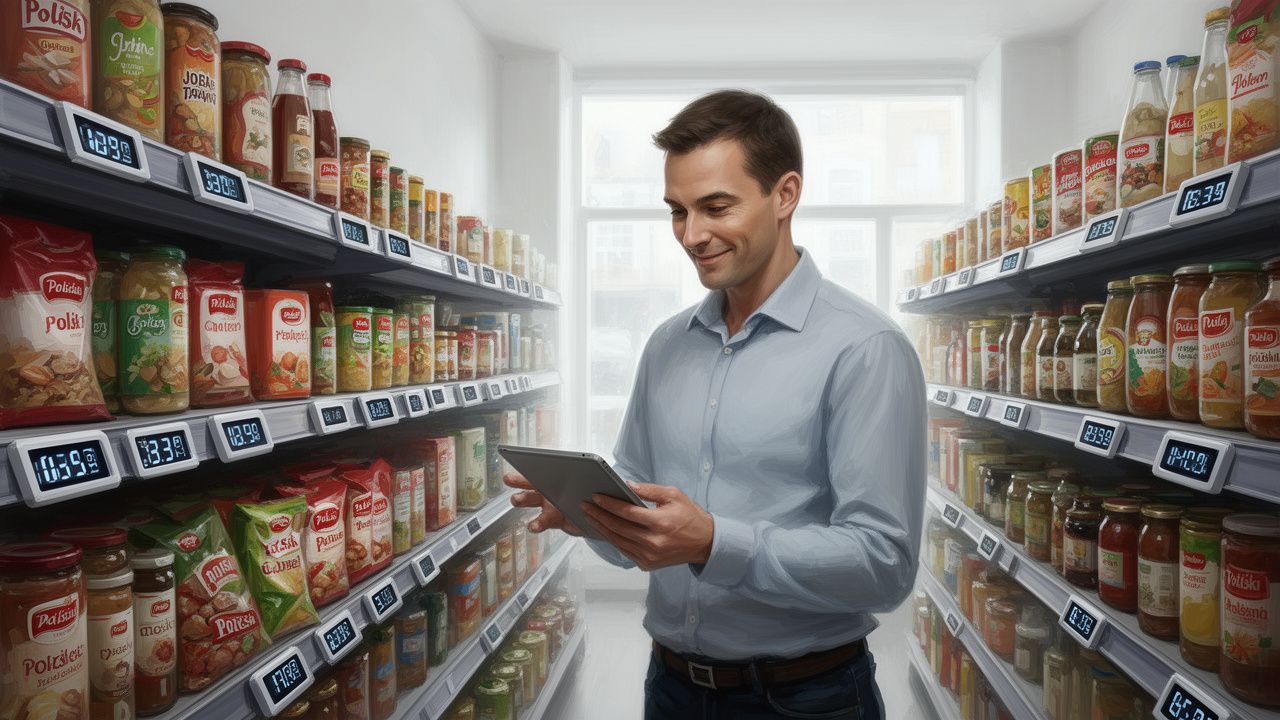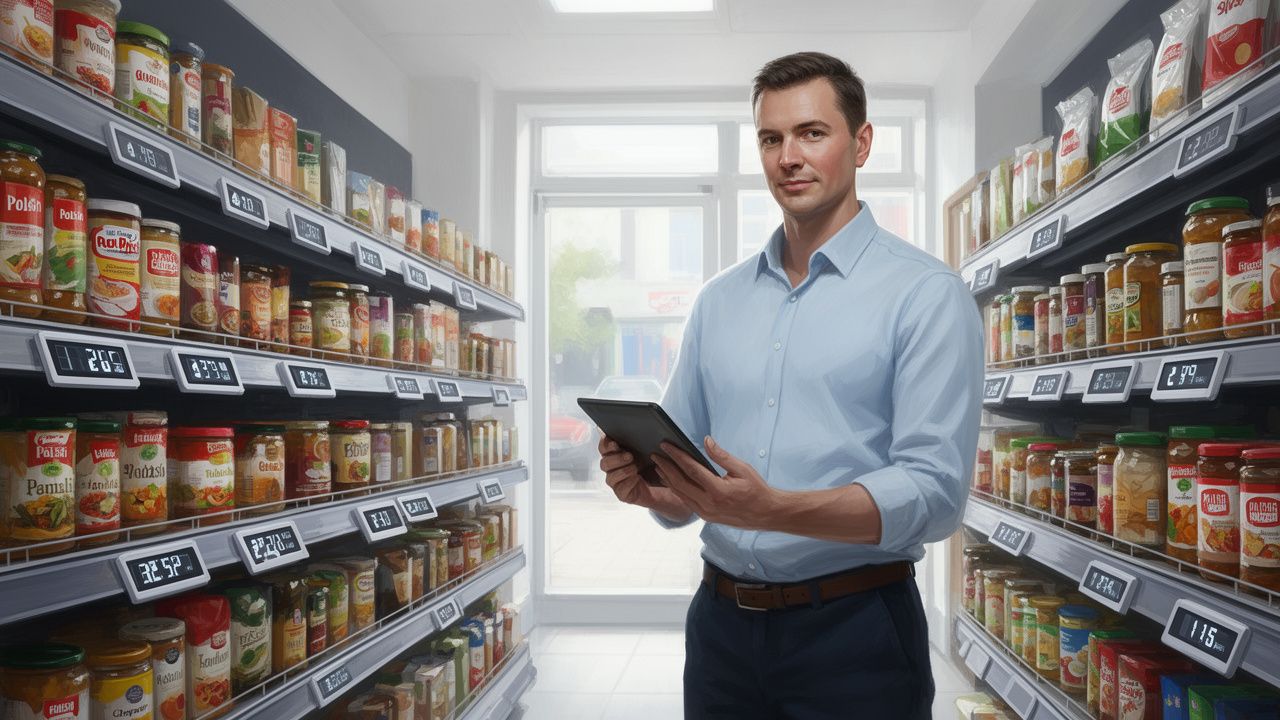


Do you remember why you opened your store? Out of passion, for independence. And now? You work 7 days a week, and weekends with family are a luxury. Discover the story of one of us – an owner who regained his personal life thanks to technology and a government grant. This could be your story too.
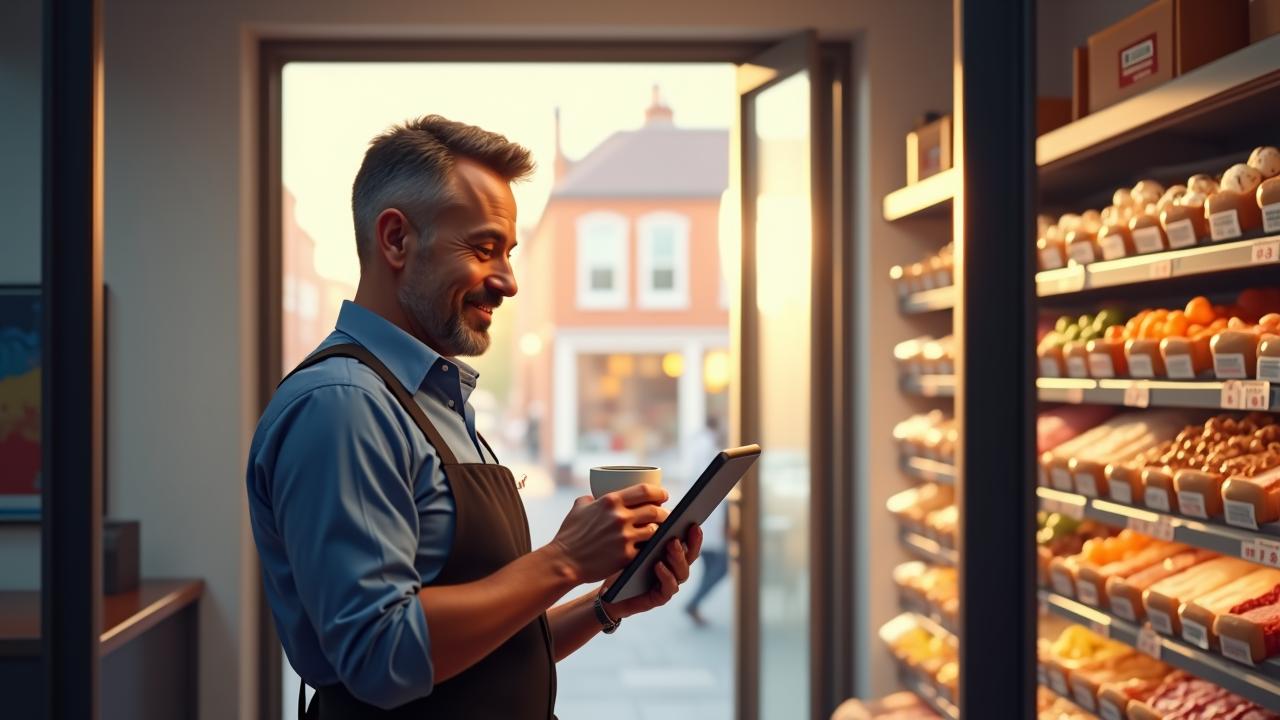
I remember perfectly the moment I opened the doors of my store. It was the fulfillment of my dreams of having my own business, a piece of Poland in the heart of a British city. However, it quickly turned out that this dream comes with a price: working 14 hours a day, seven days a week. This story is not about magical solutions, but about the real change I went through and that you can go through too, by utilizing what the British government offers.
For the first few years, I was simultaneously the owner, supplier, cashier, and cleaner. Anyone who runs their own Polish store in the UK knows this scenario all too well. Days blended into one long cycle, and my personal life practically ceased to exist. Instead of developing the business, I was just trying to survive until the end of the next week.
My Sunday evenings always looked the same: printer, scissors, and hundreds of small price tags. Manually changing price tags before Monday promotions took me a solid three hours. Inventory? A nightmare with a notepad and pen that lasted all night and was never 100% accurate. I made orders “by eye,” based on what I thought was selling best. The result? Frequent shortages of popular products and slow-moving items piling up on the shelves, which generated losses. I felt stuck, and my passion turned into frustration and chronic fatigue. My family rarely saw me, and when I was home, my mind was still stuck on the shelves of goods.
One day, I met a friend who ran a similar store in a neighboring district. He looked relaxed and was talking about a weekend trip with his kids. I was shocked. I asked him directly how he did it. His answer was simple: “I stopped doing everything myself. I invested in technology, and half of the costs were covered by a government grant.” It was the first time I heard that such support was available for small businesses like ours. Initially, I was skeptical. Grants, subsidies – it sounded like something for big corporations, not for a neighborhood store selling Polish food. But the seed was planted. I decided to check if this could really be a solution to my problems.
In the evenings, instead of cutting price tags, I started searching the internet. What I found opened my eyes. It turned out that there is a whole ecosystem of support for small and medium-sized enterprises wanting to digitize. The key was to know where and how to look.
My starting point was the official government website gov.uk and the websites of local enterprise partnerships (Local Enterprise Partnerships – LEPs). I typed in phrases like “small business grant for technology,” “digitalisation fund for retail,” or “productivity grant.” It turned out that new pools of funds appear every year, often aimed at increasing productivity and competitiveness of small businesses. The most important lesson was that in the application, it is not enough to just write, “I want to buy a new computer.” You need to present a solid business plan. I had to show how a specific investment would translate into real benefits: time savings, error reduction, better inventory control, or increased sales. I described my Sunday evenings with price tags and calculated that an electronic shelf label (ESL) system would save me over 150 hours of work per year.
Thanks to the grant that covered 50% of the costs, I invested in three key technologies:
Each of these elements was a step towards regaining control over my business and my life.
The change did not happen overnight, but after a few months, the new reality began to take shape. The effects exceeded my wildest expectations, and it wasn’t just about money.
This is the biggest and most tangible benefit. Sunday evenings now belong to me and my family. Instead of sitting in the back, we go for walks or watch a movie together. I can leave for a few days because, thanks to remote access to the sales system, I can see on my phone what is happening in the store. This sense of freedom is priceless. I work smarter, not harder. My work in the store has been reduced by an average of 20 hours a week.
Finally, I know what is happening in my business. I know which products are my bestsellers and which just take up space on the shelf. Thanks to precise data, I reduced food waste by about 15%, which translated into real savings. I remember the story of a store owner in Manchester who, after implementing a similar system, discovered he was losing hundreds of pounds a month on products whose expiration dates were passing in the back room. Now I am sure that every pound invested in goods has a chance to earn back.
When I stopped putting out daily fires, I gained time and energy for strategic thinking. Analyzing sales reports allowed me to better tailor the offer to customers. I introduced a loyalty program that is handled by my new POS system. The store looks more modern, and customers appreciate the quick service and always up-to-date prices. For the first time in years, I started seriously considering opening a second location – something that was previously in the realm of science fiction.
If you feel that your store has taken control of your life, treat my story as proof that it can be different. Here are the most important points:
Don’t wait until burnout hits you. The upcoming financial year 2025/26 is an excellent time to start looking for available forms of support. Start today, calmly, before the sales season picks up speed. Your story doesn’t have to be a tale of endless work – it can be a story of smart growth and regained balance.