

The holiday shopping frenzy is synonymous with chaos for many store owners. But what if instead of battling with posters and flyers, you could manage promotions with a single click? We dispel the most common myths about Digital Signage and show how technology can become your best employee in this crucial season.

The upcoming peak of the holiday season tests every aspect of your business. Instead of adding to your workload by manually changing posters and flyers, you can use this time to implement a tool that will automate communication and truly increase sales. Digital Signage, or digital advertising screens, is not a luxury, but a strategic support that works for you when you and your team are most busy.
Technology in retail is surrounded by many myths that often discourage investment. During the holiday season, when every minute is precious, these misconceptions can cost you lost revenue and unnecessary stress. It’s time to dispel the most common of them and show how Digital Signage practically supports Polish grocery stores in the UK.
This is probably the most common objection we encounter. The prospect of purchasing screens and software just before the holidays feels like a burden rather than an investment. However, the key is to view Digital Signage from a long-term perspective. The cost of implementing the system should be treated not as a seasonal expense, but as a store upgrade that will bring benefits throughout the year. Think about how much you spend on printing posters, flyers, and promotional banners. Add to that your or your employee’s time for designing, ordering, picking up, and finally – placing them in the store. These costs, although dispersed, add up to significant amounts over the year.
A digital system is a one-time expense for hardware (which is becoming increasingly affordable) and a small monthly subscription for content management software. The return on this investment (ROI) is visible almost immediately. Dynamically displaying high-margin products, “buy two, get one free” promotions, or bundled offers (e.g., carp + spices) directly impacts the shopping cart value. After the holidays, the system doesn’t go unused. It will work for you during Easter, the grilling season, back-to-school time, and every other trading opportunity. In a store in Birmingham that invested in two screens before December, sales of promoted holiday products increased by 18%. The owner admitted that the installation cost was recouped by mid-January, and today he can’t imagine running the store without this tool.
Many store owners are doers – they manage deliveries, staff, and serve customers. The idea of spending hours in front of a computer designing graphics seems paralyzing. This is a trap of thinking about Digital Signage as a professional graphic studio. Modern content management platforms (CMS) are designed with non-technical users in mind. They operate on a “drag and drop” basis, offering hundreds of ready-made templates that only need to be filled with your own text and product images.
Campaign scheduling is another time-saving feature. You can sit down once a week for an hour and plan all communication for the next seven days. You set that the promotion for poppy seed cakes should display from Monday to Wednesday in the afternoon hours, and the offer for borscht on Thursdays and Fridays all day. The system will take care of the rest. Compare this to the need to physically take down and put up posters every day. Moreover, you can manage content remotely – from the back office, from home, or even from your phone while standing in the warehouse. When a supplier offers you a sudden, special batch of goods, you can create and publish a promotion in less than five minutes, even before the goods arrive at the store. This level of flexibility is unattainable for printed materials.
If the screen in the store displays a static, boring image or an outdated promotion, it will indeed quickly become an invisible background. The problem lies not in the technology, but in how it is used. The human brain is programmed to respond to movement, change, and light. Well-prepared content on a Digital Signage screen attracts attention much more effectively than any poster.
The key is relevance and dynamism. Instead of a static picture of a cake, show a short video of it being appetizingly sliced. Instead of a list of ingredients, display a recipe for Christmas bigos, in which all the products are available in your store. Use screens to build atmosphere – display holiday wishes, inform about opening hours during the holiday season, and count down the days to Christmas Eve. This creates engagement and shows that your store lives in rhythm with the community. A customer waiting in line at the checkout is the perfect recipient of such messages. Instead of staring blankly into space, they can learn about a product they forgot to put in their cart. A store owner in Manchester noticed that after placing a screen by the deli counter, sales of more expensive packaged hams increased by over 20%, as customers had time to familiarize themselves with the offer while waiting for service.
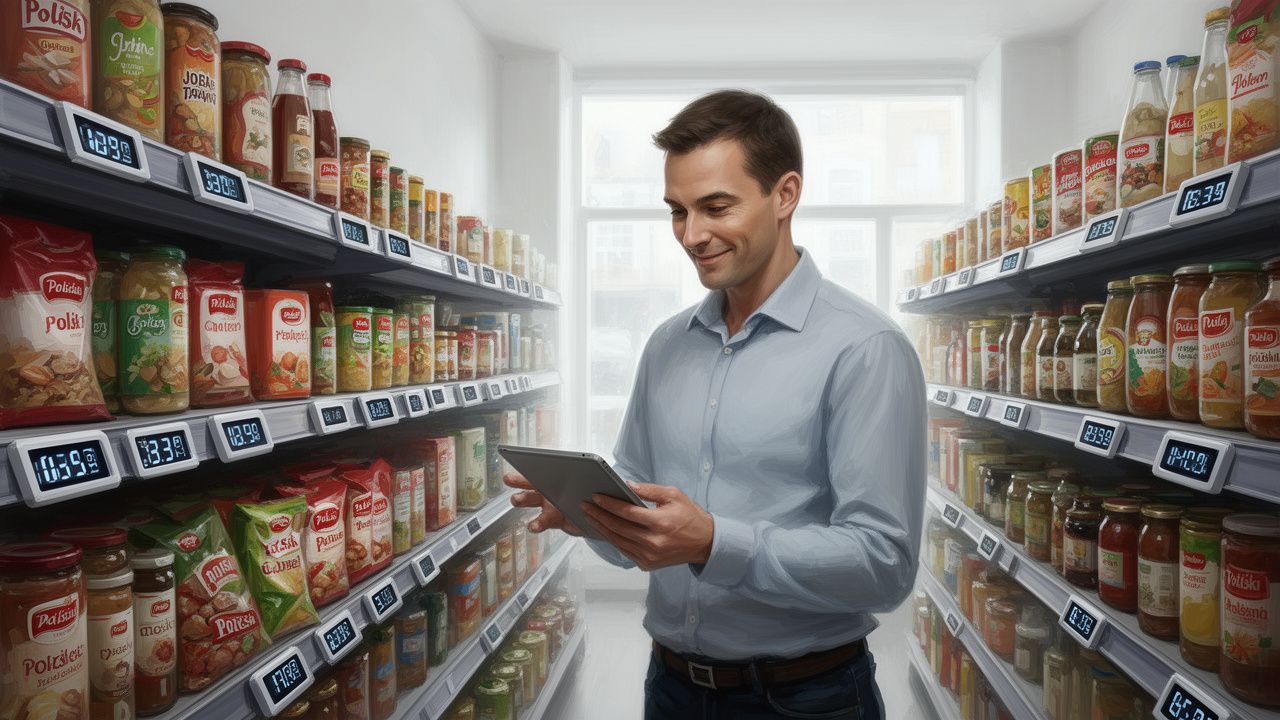
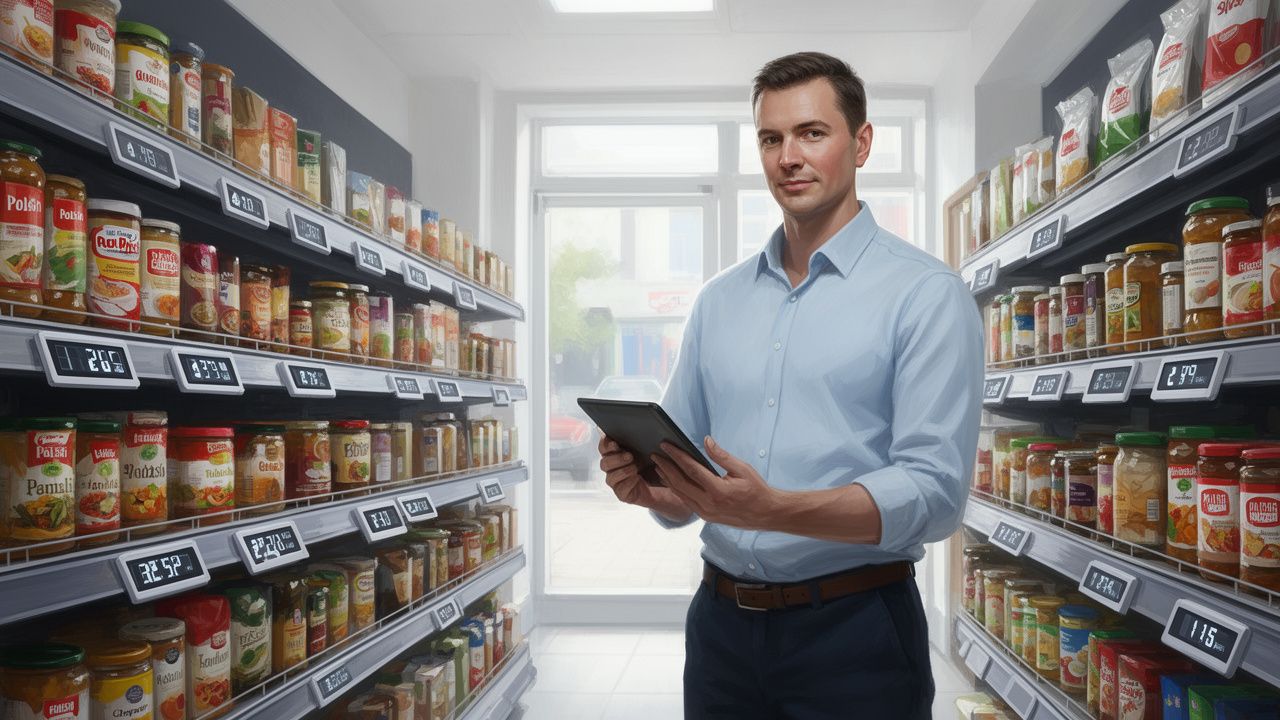
Electronic shelf labels (ESL) are a fantastic tool for automating price changes and saving time, but they serve a different function than Digital Signage. ESL informs about the price at the location where the product is located. Digital Signage, on the other hand, attracts the customer to that location, builds a narrative around the product, and inspires a purchase. These two technologies do not compete with each other, but complement each other perfectly, creating a coherent communication system in the store.
Imagine this scenario: on a large screen at the entrance, a customer sees an appetizing advertisement for a holiday cheesecake. The message informs them that today this product is on promotion. Curious, they approach the shelf with cakes, where the ESL label next to the cheesecake already displays the new, reduced price. This is a complete, seamless shopping experience. Paper posters in this setup are the weakest link. They are static, prone to damage, and require manual handling. What will you do if at noon it turns out that the promoted product has just sold out? With Digital Signage, you turn off the advertisement with one click. With a poster… well, it either hangs on, misleading customers and generating frustration, or an employee has to interrupt their duties to take it down. During the holiday peak, this flexibility and ability to respond in real-time is priceless.
Investing in Digital Signage before the holiday rush is not an additional problem, but a smart solution. It allows you to:
December is an ideal testing ground for technologies that streamline commerce. Instead of postponing the decision, it’s worth considering now how easy-to-use screens can relieve your team and maximize profits during the most important period of the year. Consult with us to choose a solution perfectly tailored to your store’s needs.