Are your customers only returning for specific products? A well-designed loyalty program can change that by building attachment to your store, not just to individual items. Learn how to create a system step by step that will turn occasional buyers into loyal, profitable customers.
How to create a loyalty program that customers will love step by step?
Implementing a loyalty program is much more than just giving discounts. It is a strategic investment in building long-lasting relationships with customers. In an era of increasing competition, where every pound spent on marketing matters, loyalty becomes the most valuable currency. The following guide will help you navigate the entire process – from concept to results analysis.
Step 1: Define the goal – why do you need a loyalty program?
Before you start choosing between points and discounts, ask yourself a fundamental question: what do you want to achieve? Without a clearly defined goal, your program will operate in the dark. Your goal could be one of the following or a combination of them:
- Increasing visit frequency: You want customers who come in once every two weeks to start visiting your store weekly. The program can motivate them to do so by offering rewards for regularity.
- Increasing average basket value: Your goal is to encourage customers to spend more during one visit. Mechanisms like “spend £50 and get extra points” work great here.
- Reducing customer churn: You want to retain those who might switch to competitors. Personalized offers and a sense of being appreciated can effectively prevent this.
- Building community and image: A loyalty program is a great communication tool. You can inform about new products, organize special events for club members, and build the image of a store that cares for its regular customers.
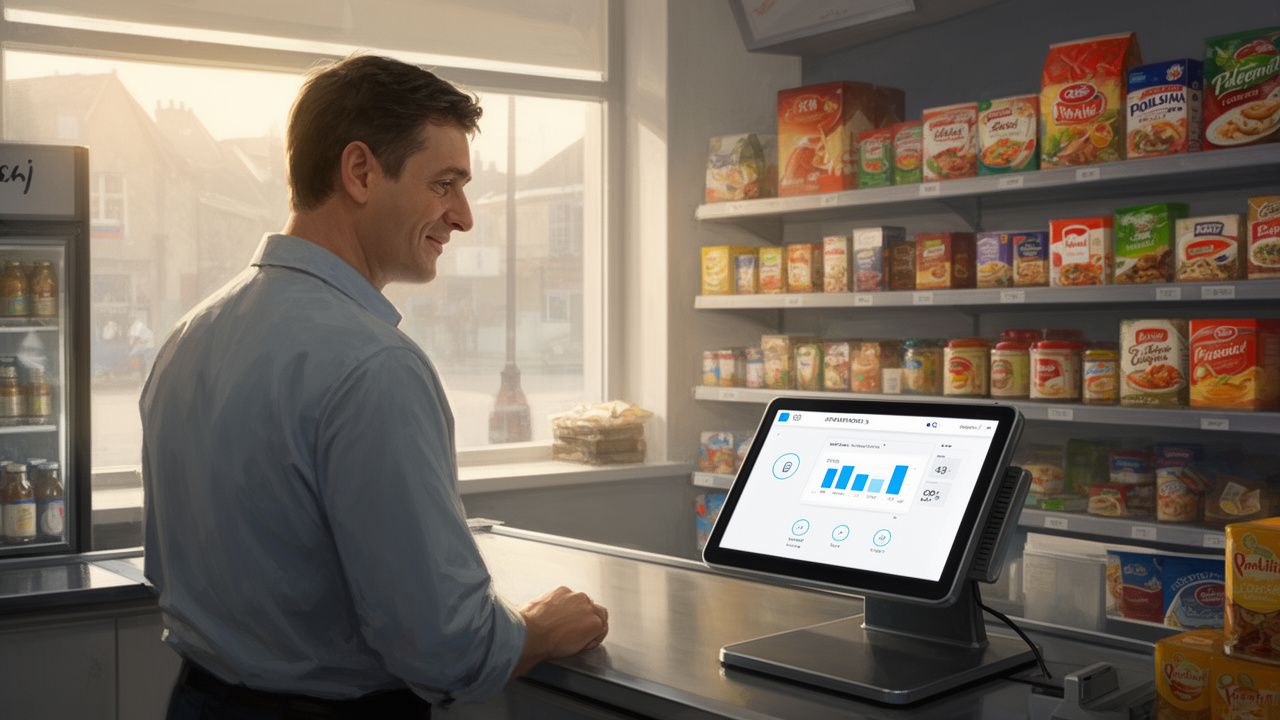
- Collecting customer data: Modern POS systems integrated with loyalty programs allow you to understand what and when your best customers buy. This is invaluable knowledge for planning orders and promotions.
Defining the priority will allow you to choose the right tools and measure the effectiveness of actions in the next steps.
Step 2: Choose the mechanics – how will you reward?
Once you know what you want to achieve, it’s time to choose the form of the program. There is no one ideal solution – the best mechanics are those that fit your store and are understandable to customers.
- Point program: The most popular model. Customers earn points for money spent (e.g., £1 = 1 point), which they can later redeem for rewards. It is simple, intuitive, and gives customers a sense of continuous progress. The key is to properly balance the value of points so that rewards are attractive but also profitable for the store.
- Tiered program: Customers advance to higher levels (e.g., Bronze, Silver, Gold) based on the amount spent in a given period. Each subsequent level unlocks better benefits: a larger permanent discount, free delivery, or access to exclusive offers. This is a great way to motivate larger and more frequent purchases.
- Digital punch card: Ideal for promoting specific products or categories. “Collect 9 stamps for buying coffee, and get the 10th free.” Modern POS systems allow you to manage such cards digitally, without the need for printing and stamping paper.
- Paid membership (VIP Club): A more advanced model where customers pay a small annual or monthly fee in exchange for permanent, exclusive benefits (e.g., 10% discount on all purchases, free coffee every week). This solution is for stores that already have a base of very loyal customers.
Step 3: Compose the offer – specific ideas for rewards and discounts
This is the heart of your program. Rewards must be attractive enough for customers to want to participate in the program. They don’t have to be expensive, but they should be desirable. Here are some tried-and-true ideas:
- Product rewards: “Redeem 100 points for a free donut” or “500 points for a jar of your favorite pickles.” Tangible rewards often have a higher perceived value than their cash equivalent.
- Cash and percentage discounts: “Collect 250 points and receive £5 off your next purchase.” This is a simple and always effective form of rewarding.
- Exclusive access: “Club members only: carp promotion 2 days before everyone else.” The feeling of being special is a powerful motivator.
- Point multipliers: “Double points on purchases every Tuesday!” – this is an excellent way to increase traffic on slower days of the week. You can also award extra points for purchasing high-margin products.
- Personalized offers: If your POS system allows it, use purchase history. Send a personalized coupon for their favorite sausage to a customer who regularly buys Polish cold cuts.
A store owner in Manchester was struggling with low traffic in the middle of the week. He introduced a promotion “Double points on Tuesdays.” After three months, Tuesday sales increased by almost 15%, bringing them in line with Thursday sales.
Step 4: Technical implementation and effective communication
Even the best idea will fail if its implementation is complicated. The era of paper cards and manual data entry is over. The key to success is integrating the loyalty program with your sales system (POS).
Implementation in 3 steps:
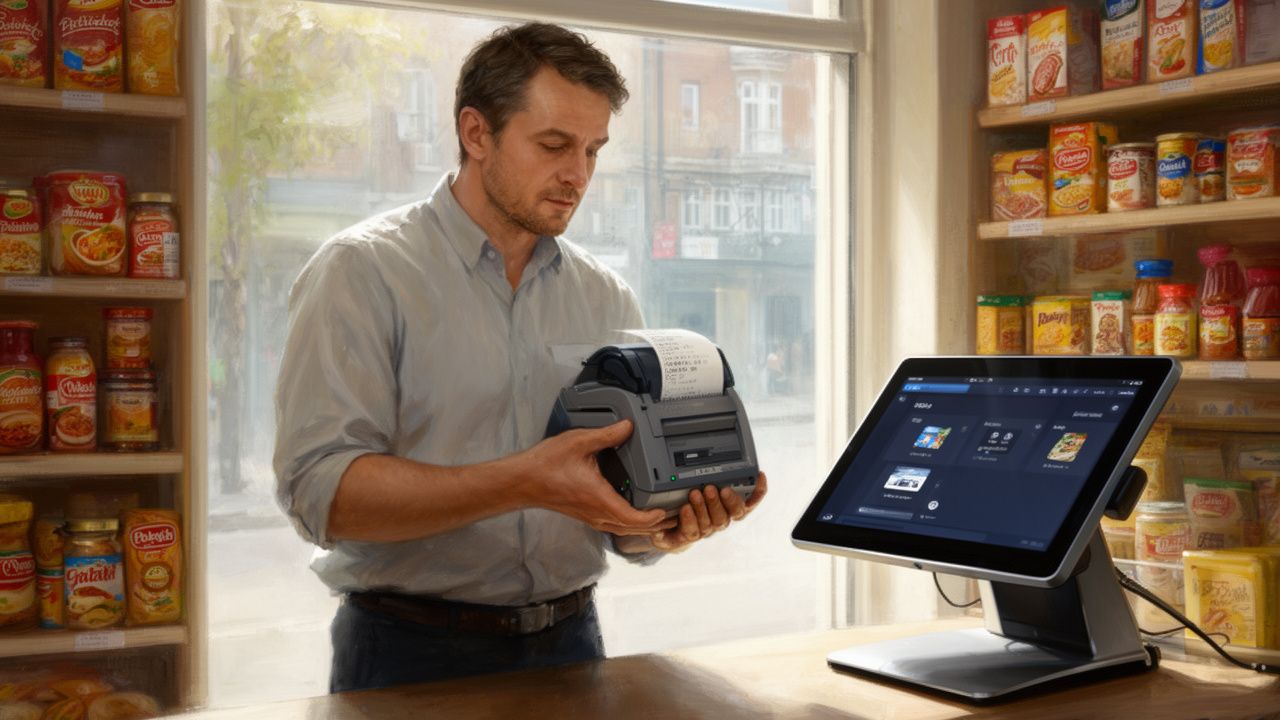
- Configuration in the POS system: Choose the mechanics, define thresholds and rewards. Modern systems allow you to do this in a few minutes. Make sure the customer enrollment process is quick – just a phone number or email address is enough.
- Staff training: Your employees are the ambassadors of the program. They need to know how it works, what the benefits are, and how to easily encourage customers to join at the checkout. They will be the ones answering questions and solving problems.
- Preparing informational materials: Simple, clear posters at the entrance and checkout, small flyers, information on receipts. The message must be clear: “Join our club and save. Ask the cashier!”
A store owner in London noticed that customers were collecting points but rarely redeeming them. The solution turned out to be simple training for cashiers to actively inform at each transaction: “You have 300 points on your card, you can get a free coffee. Should I add it to your bill?” The use of rewards increased by over 40% within a month.
Step 5: Analyze and optimize – don’t leave the program to itself
Launching the program is just the beginning. The real value lies in the data you will start collecting. Regularly analyze key metrics to ensure the program is delivering the expected results.
What to measure?
- Number of active participants: How many customers regularly use the program?
- Redemption Rate: What percentage of points collected is redeemed for rewards? Too low may indicate that the rewards are unattractive.
- Average transaction value: Compare the basket of program members with the basket of non-members. Do participants spend more?
- Purchase frequency: Do club members actually visit the store more often?
Don’t be afraid to experiment. If you see that a certain reward is not attracting interest, change it. If sign-ups for the program have slowed down, organize a short promotional campaign with extra points for joining. A loyalty program is a living organism that should evolve with your store and customer expectations.
Summary of key steps
Creating an effective loyalty program is a process that requires thoughtful strategy. Remember the fundamentals:
- Start by defining a clear business goal.
- Choose a simple and understandable mechanics for customers.
- Design attractive and achievable rewards.
- Ensure smooth technical implementation and staff engagement.
- Regularly analyze results and optimize the program’s operation.
Start building loyalty today
A well-implemented loyalty program is an investment that pays off many times over – not only in the form of greater profits but also in a more valuable, stable relationship with customers. The upcoming period of increased shopping is the perfect time to start. Plan your actions now, and you will build a customer base that will return to your store all year round.
Have additional questions?